The order to learn world history: 13 eras
Short answer
Learn world history in this order: Ancient Egypt, Ancient Greece, Ancient Rome, Medieval Europe, the Renaissance, the Age of Exploration, the American Revolution, the French Revolution, the Industrial Revolution, the American Civil War, World War I, World War II and the Cold War. Each era sets up the next: Greek ideas shape Rome, Rome's fall shapes medieval Europe, printing and exploration lead to the age of revolutions, and the two World Wars lead to the Cold War. Learn one era at a time and, for each, write one sentence linking it to the era before. This 13-era path focuses on the eras that shaped Europe and the Americas; it is also the path Aurelius, our app, follows in 127 lessons.
By Angelo Sorbello. The dates below are the usual round figures; historians draw the lines differently, and that is fine. What matters is the order and the link to the next era.
World history in 13 eras, in order
- 1Ancient Egyptc. 3100–30 BCE
- 2Ancient Greecec. 800–146 BCE
- 3Ancient Rome753 BCE–476 CE
- 4Medieval Europe476–c. 1450
- 5The Renaissancec. 1350–1600
- 6Age of Explorationc. 1400–1700
- 7American Revolution1765–1783
- 8French Revolution1789–1799
- 9Industrial Revolutionc. 1760–1840
- 10American Civil War1861–1865
- 11World War I1914–1918
- 12World War II1939–1945
- 13The Cold War1947–1991
The 13 eras and how they connect
| # | Era | Roughly | Leads to |
|---|---|---|---|
| 1 | Ancient Egypt | c. 3100 BCE – 30 BCE | Writing, monumental states; ends as a Roman province |
| 2 | Ancient Greece | c. 800 BCE – 146 BCE | Democracy, philosophy; absorbed by Rome |
| 3 | Ancient Rome | 753 BCE (traditional) – 476 CE in the West | Law, Latin, Christianity as state religion |
| 4 | Medieval Europe | 476 – c. 1450 | Kingdoms, the Church, Magna Carta, the Black Death |
| 5 | The Renaissance | c. 1350 – 1600 | Printing, rediscovered classics, new science |
| 6 | The Age of Exploration | c. 1400 – 1700 | Ocean empires, the Columbian exchange |
| 7 | The American Revolution | 1765 – 1783 | A republic built on Enlightenment ideas |
| 8 | The French Revolution | 1789 – 1799 | The end of absolute monarchy; Napoleon |
| 9 | The Industrial Revolution | c. 1760 – 1840 | Factories, cities, steam and rail |
| 10 | The American Civil War | 1861 – 1865 | The end of slavery in the US |
| 11 | World War I | 1914 – 1918 | Fallen empires, a harsh peace |
| 12 | World War II | 1939 – 1945 | The Holocaust, the atomic age, the UN |
| 13 | The Cold War | 1947 – 1991 | A divided world; ends with the Berlin Wall and the USSR |
The ancient world (eras 1–3)
Egypt shows the first great state built on writing and monuments; Greece adds philosophy, drama and the idea of citizens voting; Rome spreads law, roads and Latin across the Mediterranean and, late in its history, adopts Christianity.
Medieval Europe to the Renaissance (eras 4–5)
After Rome falls in the West, kingdoms and the Church shape a thousand years. The Black Death, the printing press and rediscovered classical texts help open the Renaissance.
Exploration and the age of revolutions (eras 6–8)
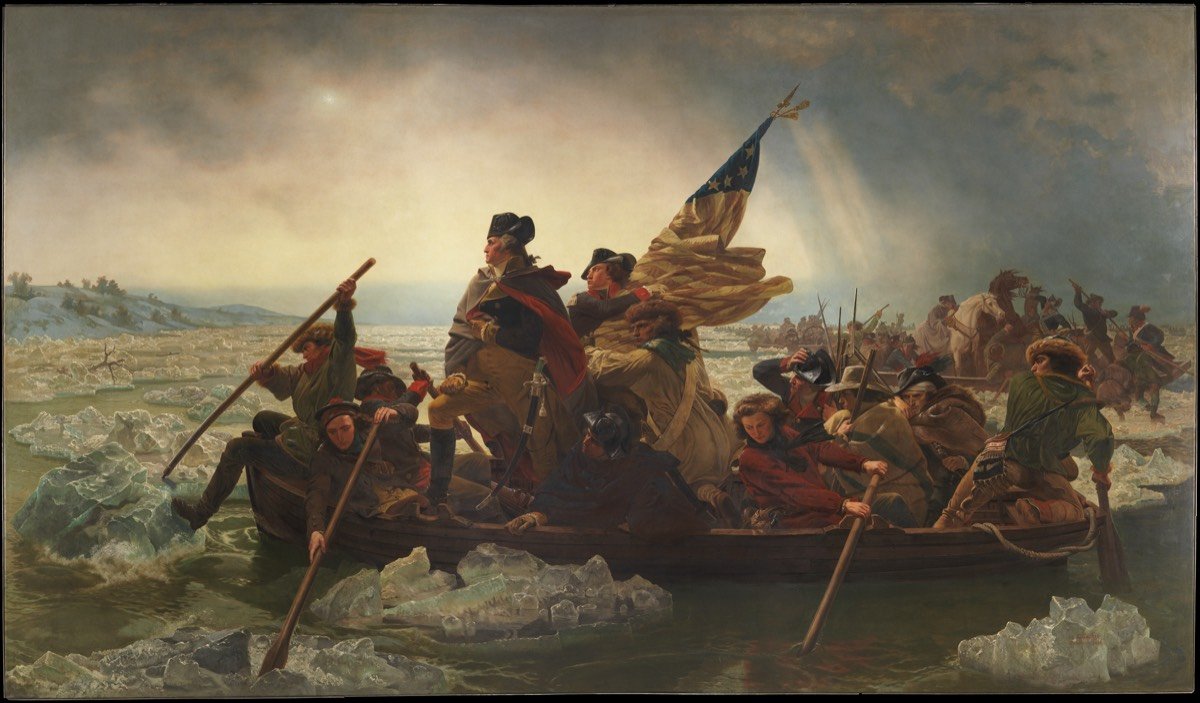
Ocean voyages connect continents and build empires. Enlightenment ideas feed the American Revolution, which in turn helps inspire the French one.
The industrial and modern world (eras 9–13)
Steam and factories change how people live; the American Civil War ends slavery in the US; two World Wars reshape the map and lead to a forty-year standoff that ends with the fall of the Berlin Wall in 1989 and the USSR in 1991.
How to use this timeline
Learn one era at a time, in this order, and for each one write a single sentence: "This happened because of the era before, and it led to the next one because…". Five minutes a day gets you through all 13 in a few months. How to learn history explains the method and the research behind it.
What this path leaves out
It follows the eras that shaped Europe and the Americas. Once you have it, add the history of China, India, the Islamic world, Africa and the pre-Columbian Americas; the World History Encyclopedia app covers every continent for free, and Histopia has courses on China and Russia.
An app that follows this order
Aurelius, our app, is built on exactly these 13 eras: 127 illustrated lessons, each linked to what came before and after, with a quiz after each and real paintings and photos credited on every image. 3-day free trial, then $9.99 a month. Other apps with a path through world history: the best world history apps.
Frequently asked questions
What is the right order to learn world history?
Chronological: ancient civilizations (Egypt, Greece, Rome), the Middle Ages, the Renaissance and exploration, the age of revolutions, the industrial age, the World Wars and the Cold War.
Should I learn world history or my country's history first?
World history first gives you the frame; your country's history then fits inside it.
How long does it take to learn world history?
A first pass through 13 eras at one 5-minute lesson a day takes a few months; Aurelius' 127 lessons take about four months at one a day.
When did the Middle Ages begin and end?
By the usual convention, from the fall of the Western Roman Empire in 476 to around 1450–1500, when printing, the fall of Constantinople (1453) and the voyages of exploration mark a new age.
When did the Cold War end?
Most historians date its end to 1989–1991: the fall of the Berlin Wall in November 1989 and the dissolution of the Soviet Union in December 1991.
Sources
- Era boundaries are conventional round dates used in general histories; see each era's entry in the World History Encyclopedia for detail.
- Emanuel Leutze, Washington Crossing the Delaware, 1851, The Metropolitan Museum of Art, Open Access (CC0).